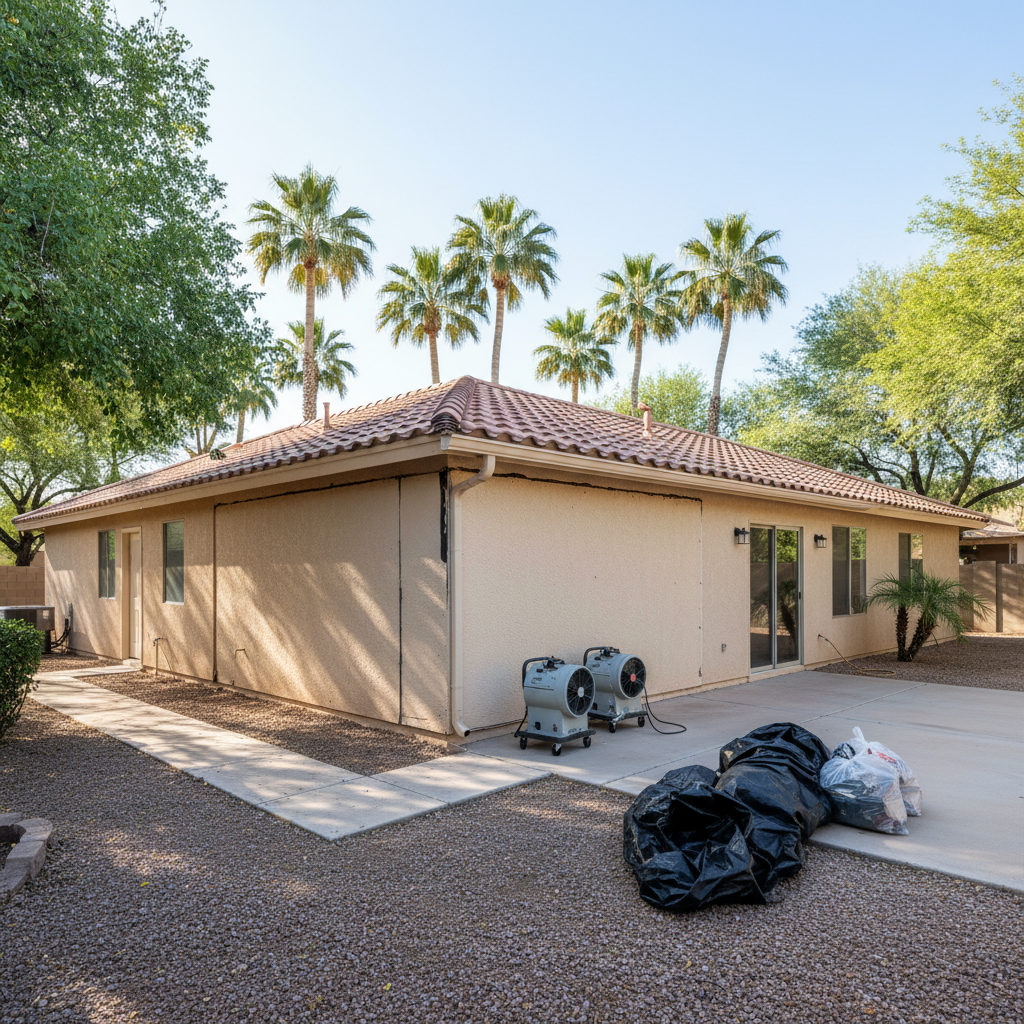
Finding mold after a pipe leak or a heavy monsoon downpour can be a difficult situation to manage. If you live out near Fort McDowell, you already know how fast our dry desert heat can mask hidden moisture problems until it is too late. When water gets trapped behind drywall or under flooring, mold takes hold in no time. Crown Restoration has walked hundreds of local homeowners through the exact steps of tackling these projects without losing their time or money.
What the Timeline Actually Looks Like
Most homeowners want to know how fast everything gets back to normal. A standard mold remediation project usually spans anywhere from 3 to 7 days, depending on how far the spores have traveled. Day one is all about containment and assessment. Crown Restoration sets up plastic barriers and negative air pressure to keep spores from drifting into your clean rooms. Days two and three involve removing ruined materials like wet drywall or soggy insulation, followed by deep HEPA vacuuming and antimicrobial treatments. The final days focus on structural drying and clearance testing to make sure the space is completely safe before rebuilding starts.
How to Prepare Your Home and Family
Homeowners should not have to live in a construction zone without warning, so knowing what to expect makes a big difference. You will want to clear out personal items from the affected work zones, especially near baseboards and interior walls where moisture tends to hide. Depending on the scale of the contamination, you might need to stay out of specific rooms while the heavy-duty air scrubbers run. Pets and children especially need to stay clear of containment areas since airborne spore counts spike temporarily during the initial demolition phase.
Crucial Questions to Ask Before Signing a Contract
Homeowners should not just sign the first estimate that lands on their kitchen table. You need to protect your investment by asking the right questions upfront. Always ask if they perform third-party clearance testing to verify the mold is actually gone. Find out what specific containment methods they use to protect unaffected living spaces. Make sure they handle both the demolition and the reconstruction phases so you are not left coordinating multiple separate contractors out here in the East Valley. Clear communication right from the start saves you time and keeps your project moving forward reliably.